Synopsis
'The best collection I've read in ages: every poem contains something unexpected and unexpectedly powerful. This is serious, modern, ambitious and bold work – the kind of poetry you hope to find, and rarely do' – Nick Laird
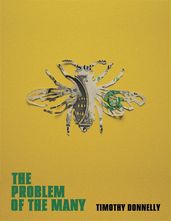
John Ashbery called Timothy Donnelly’s previous collection, The Cloud Corporation, ‘The poetry of the future, here today’. The Problem of the Many sees Donnelly, one of the most influential poets of his generation, focused less on the future than the end of history: these richly textured and intellectually capacious poems often seem to attempt nothing less than a circumscription of the totality of human experience. The book contains the already widely praised ‘Hymn to Life’, which opens with a litany of what we have made extinct; elsewhere, from an immediately contemporary vantage, Donnelly confronts the clutter and devastation that civilization has left us as he strives towards a beauty that we still need, along the way enlisting agents as various as Prometheus, Jonah, Flamin’ Hot Cheetos, NyQuil, Nietzsche, and Alexander the Great.
The Problem of the Many refers to the famous philosophical problem of what defines the larger aggregate – a cloud, a crowd – which Donnelly extends to address the subject of individual boundary, identity and belonging. Donnelly’s solutions may be wholly poetic, but he has succeeded in speaking as deeply to these profound and urgent issues as any writer currently at work.
Details
Reviews
“The best collection I've read in ages: every poem contains something unexpected and unexpectedly powerful. This is serious, modern, ambitious and bold work - the kind of poetry you hope to find, and rarely do”Nick Laird
“Dramatic tension, humor, lyrical profundity. This is an utterly ingenious and proudly inclusive voice . . .a sensibility so urgent we find ourselves momentarily re-inventing the term Poet.”Carol Muske-Dukes, Huffington Post
“A Stevens of the Anthropocene”Douglas Crase, Artforum
“Omnivorous, fast-forward, bull-in-a-china-shop poems that deliver more beauty per minute than can comfortably be withstood. If Whitman had had a young kid and a Brooklyn apartment, too many bills, and a stack of takeout menus in the top drawer of his Ikea desk, he would have written these poems.”New Yorker, New Yorker